Francis Street, Dublin
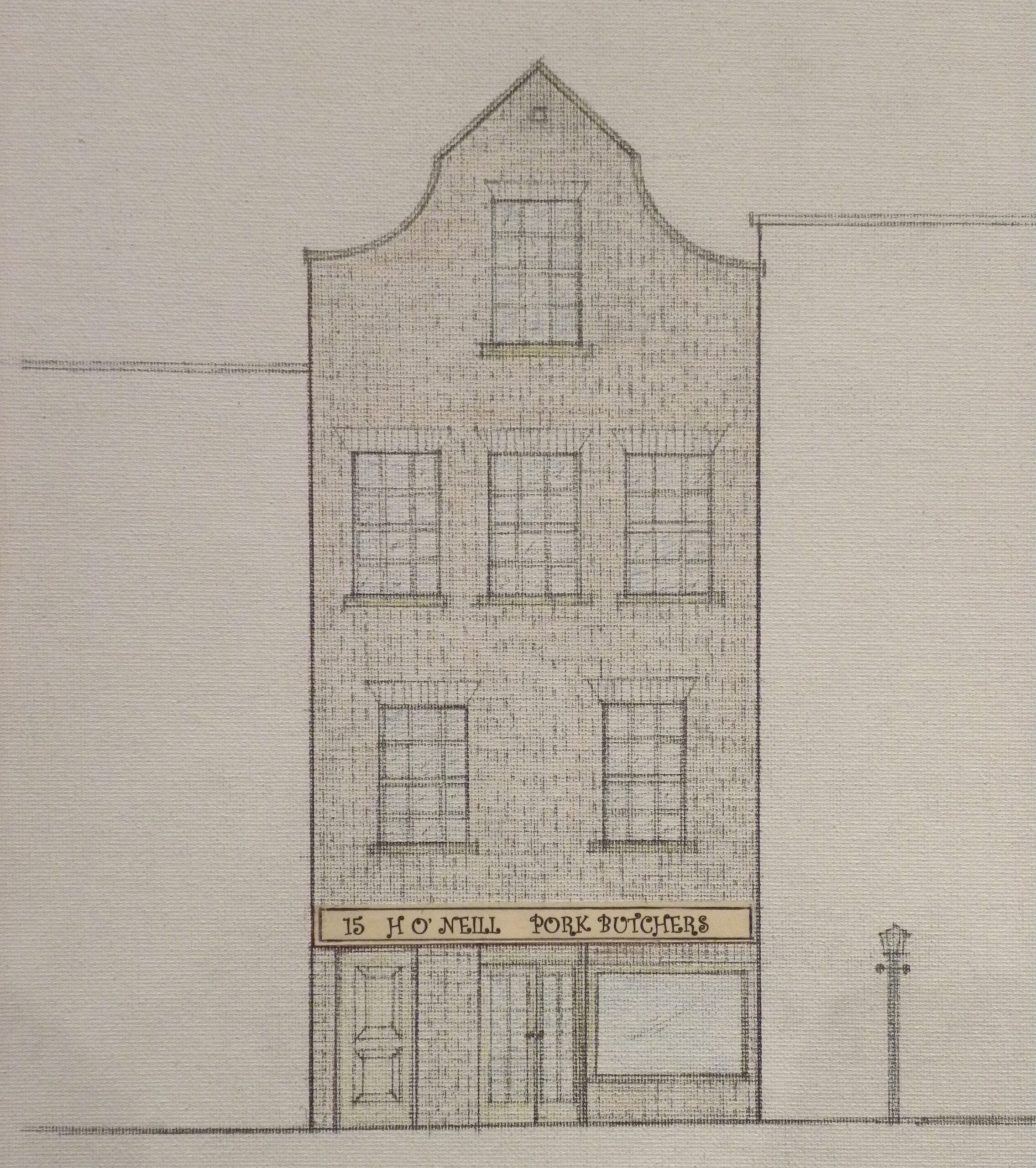
By the 17th century brick had replaced timber as the main structural support in house building. Early designs featured plain triangular gables but these changed over the years with influences arriving from the continent and elsewhere, particularly during the reign of William 111, (of Orange) when tall houses with curvilinear gables and cruciform roofs began to appear on the streets of Dublin. Styles of this type were commonly called, Dutch Billy’s.
15, Francis Street was one such house, home first to a Huguenot gentleman, William Lunell, Cloth Merchant & Private Banker who’d settled in Dublin following the Williamite Wars. The house of red brick was built in 1721 on a vacant site between houses of an earlier period, with cellar below for storing coal and coach yard at the back. Ground floor comprised a retail unit at front with space adjacent for display of materials. The house door opened into a long hallway, with steps at the far end descending to the cellar. A door in the hallway gave access to the retail unit. The staircase, featuring pine treads and balustrades wound all three floors to the top, providing access to the attic bedroom and loft overhead. Narrow landings met each floor. The living room on first floor ran full depth of house, complete with oak flooring, stepped fireplace and candle chandelier. Sash windows lit all rooms to the front, including the master bedroom on the first floor landing which overlooked the street.
The second floor comprised three large bedrooms, two with fireplaces, including a separate water closet with wash tub, hand basin and toilet. The third floor featured an attic bedroom with inspection table for examining materials, complete with roof window in east gable, providing views across Dublin by day, and should skies be clear, starry nights.
Guests to the house
Over the years, William Lunell, along with wife Ann, and daughter, Martha, had many important guests to their home. Amongst them, John Wesley, cofounder of the Methodist Church of England, who came to Dublin, August, 1747 and stayed for a fortnight. The following year his brother, Charles Wesley, stayed also. Most important of all was, George Whitefield, the renowned Anglican preacher who stayed in 1751, famous for his `Awakening’ tours of Britain and the North American Colonies, befriending Benjamin Franklin while there too.
Recent History
Through passage of time the house succumbed to dereliction. Eventually, my Grandfather, James (John) O’Neill, seeking larger accommodation for his growing family, purchased the house when it came for sale in 1914, just before the outbreak of World War 1. At great expense he restored the house to its former glory. Improvements included a kitchen at the back of the living room, and new bathroom and toilet facilities on the second floor. Later, he had the original retail unit converted into a butcher shop for his wife, Helen (O’ Neill) the shop thereafter known as O’ Neill’s Pork Shop. In renewed state the house stood proud amongst the others on the street. Many of which, in need of repair themselves were typical of the overcrowded tenements in Dublin at the time.